Canada’s meeting place for freelance writers and creators
Established 2010
Canada’s meeting place for freelance writers and creators
Established 2010


In this regular feature, Story Board asks Canadian writers to share a few details about their work habits and their strategies for navigating the ups and downs of freelance life.
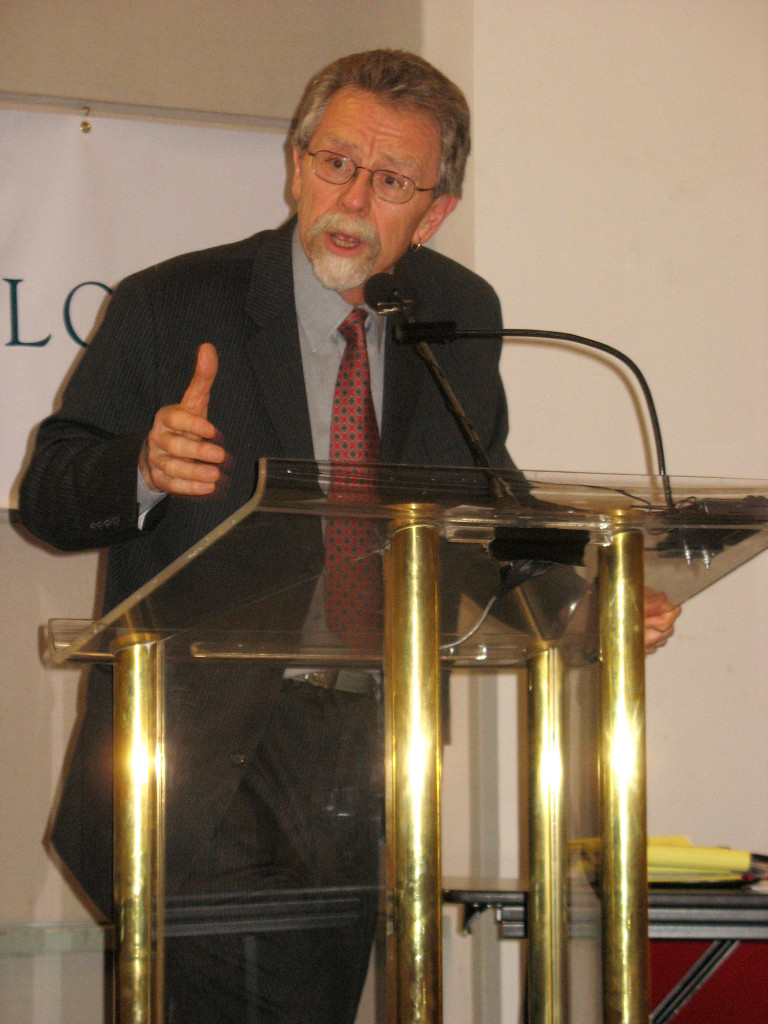
Tom Sandborn is a Vancouver freelance writer who also works as a fundraiser and consultant. He has been involved in community activism since the American civil rights movement of the 1960s. He has written about subjects such as labour, health policy and social policy for publications like the Globe and Mail, the Vancouver Sun, the Tyee and the Georgia Straight.
He took the time to speak with Story Board recently about journalism, the labour movement and the importance of living by your words.
How have things changed since you started freelancing?
I think that in that period of time, in my lifetime, we saw an enormously exciting emergence of alternative journalism, things like the Georgia Straight here in town. Underground newspapers everywhere, underground radio stations everywhere. Much of that has been tamed and subsumed in the way that the other insurgent impulses of the counter culture were. Exciting expose journalism got turned into shock rock radio and all of the effluvia that's available online.
I think that the funding base for independent journalism has diminished enormously and media concentration has spiked in a way that works inversely with that. More and more concentrated control by big corporations and less and less funding for independent journalism. There are some interesting experiments like The Tyee, where I work, and like the Vancouver Observer here in town. There's still a small independent broadcast journalism world. But I think that the areas of real critical examination of what's going on have been reduced. And that's bad for democracy and it's also bad for freelancers because it means less work unless you're willing to do sponsored journalism.
Do you have any inkling of what the solution is to all of this?
No! I have hopes and I have kind of speculative projects. I think that the revival that's going on in the labour movement right now right across North America, the 15 buck minimum wage campaigns and the outreach to young workers, is exciting both on labour basis and also on a media basis.
Because when you get those kinds of popular movements, when you get that kind of push from below to get a more just world, you start to get some new and exciting writing. A lot of it will be unpaid blog stuff, a lot of it will be on Twitter, God help us, but I do think those are some of the areas of guarded optimism.
Writing-wise, certainly. But income-wise?
No, I think that it's probably realistic to think that most freelance writing is going to be like farming. It needs to be supported by a day job somewhere else. Don't quit your day job I think is one of the mantras of the age. And I'm sorry, because I don't think that's good news for the quality of the work or people's lives.
Your career has changed a lot over the years, how did you finally come to be a writer?
My wife says that I'm a writer because I like to snoop. I like to poke into other people's business and I think she's right. I find a lot of writers come from pretty dysfunctional families. Not that there are a lot of functional families around, but I think there's a little tilt there because you grow up trying to figure out what the hell's going on. "Why is Dad so crazy?" And that becomes a heuristic that can take you out into the world and guide, perhaps, more useful curiosities.
Would you consider yourself a specialist or a generalist?
Oh I've never been hardworking or intellectually rigorous enough to be a specialist at anything. I would call myself a generalist. I write about labour, I write about health policy, I review fiction, I review history, I write about social policy. A lot of my concerns are shaped by having come of age politically in the civil rights movement and the anti-war movement and having been very influenced by the women's liberation movement and gay liberation and anti-racist movements. So I'm curious about, again, "why is Dad so crazy? Why are things so painfully wrong in this culture and what's going on in the places where there are hopeful little bubbles of resistance and creation?" And I think if there's a single thread that runs through my interests and my writing, it would be that.
You clearly have very strong political convictions, has that ever been a problem for you as a freelance writer?
Well it's gotten me fired more than once! That's a problem!
But no regrets?
Not one. No. If you live by your words. If you're a writer and if you start falsifying what you believe and what you think were the facts, you're doing a horrible violence to yourself.
And if you don't believe that you have a soul that comes down from something transcendent, that you're an existentialist and you think you make your identity, if you start subverting what's core to your identity to please a fickle boss, it's self-damage.
What advice would you give to a freelancer just starting out?
I would say, with H.L. Mencken, that the only way that a writer should look at those in power is down. And that the most holy goal of a good working journalist is to "comfort the afflicted and afflict the comfortable." And if at the end of the day or the end of your career you can see that you've actually done that, then you've paid your room rent on the planet.
That's what public writing ought to be about. Individualism, which is a really tempting ideology for freelance writers -- we kill what we eat, we're out there in the market, we're not wimps like those people who have real jobs -- is bullshit. It's an illusion.
Every single thing I do and accomplish in the world is actually collective. There are always invisible others that make your clothes, that pave the streets that make the coffee you drink, that generate the world of ideas and discourse in which we work. There's never an independent achievement of any kind. It's always collective. And given that we owe so much to the other people, particularly the invisible people who've done that collective work, in all justice we ought to put a little bit back into the system.
And poking at power and increasing, however incrementally, the level of human justice, is how you pay your rent on the planet. How you pay back for all the invisible collective support that's gotten you this far.
• Tom Sandborn lives in Vancouver. Some of his recent and proudest work has been about the labour struggles of Native court workers, Vancouver's Catholic Worker House, Canada's damaged international reputation, and collaborative divorce. He also recently reviewed Lee Maracle's Celia's Song for the Vancouver Sun. You can reach him at tos65@telus.net.
(This interview has been edited and condensed)