Canada’s meeting place for freelance writers and creators
Established 2010
Canada’s meeting place for freelance writers and creators
Established 2010


This series of posts by the Born Freelancer shares personal experiences and thoughts on issues relevant to freelancers. Have something to add to the conversation? We'd love to hear from you in the comments.
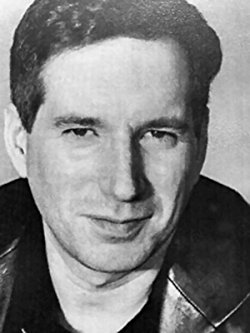
Writing a novel is the dream of many freelance writers, but few of us achieve this formidable goal. A first novel is therefore always an exciting event for a freelancer although the path to being published is often strewn with obstacles and decisions unfamiliar to the unpublished.
Daniel Sugar is a Toronto-born and based freelancer who has written for various celebrities and a number of TV shows including The Tonight Show with Jay Leno. A fan of the work of Sidney Sheldon, Jackie Collins, J.K. Rowling, Dan Brown and other best-selling authors, Salem Burning is his first novel.
THE BORN FREELANCER: Daniel, you've set your first novel in a turbulent and iconic era - that of the Salem witch trials. In it, a dishonourable young man breaks his engagement by falsely accusing his betrothed of witchcraft. The twist is, she turns out to actually be a witch. How did you come up with the story?
DANIEL SUGAR: One day I thought, what if someone told a lie and it just happened to be true? And then I thought, and what if that happened in 1692? Once I had those two things, the entire story flashed through my mind and I couldn’t wait to write it. I saw the whole thing very clearly... It all poured out very quickly – I had a first draft in 9 days and then I polished it for about a year.
THE BORN FREELANCER: What kind of research was required to construct a believable narrative?
DANIEL SUGAR: While I was polishing the novel, I did a lot of research so that everything would seem authentic, the clothes, the food, the homes. I did an enormous amount of research for the scene where Lilly actually goes to trial. I was really afraid to make a mistake because the Salem witch trials actually happened and people really were executed. I took it very seriously – you have to honour the dead – you can’t make light of a terrible and shocking historical event.
THE BORN FREELANCER: You've chosen to self-publish. What made you choose to go that route and not a more conventional author/publisher route? DANIEL SUGAR: The bump in the road was rejection by literary agents who told me I have a very commercial style of writing. When people send you e-mails praising your style and your novel you think you’re going to get an agent. Unfortunately, it didn’t work out that way and I had to look for another way to offer Salem Burning to readers. Twenty years ago, the novel would have just gone into a drawer and would have been forgotten.
THE BORN FREELANCER: So you opted to self-publish. Why choose Amazon?
DANIEL SUGAR: There are no barriers to self-publishing on Amazon - any writer can publish. The process is completely automated.
THE BORN FREELANCER: Take us through it, step by step.
DANIEL SUGAR: The process is: Format your manuscript for ebook and paperback and design your cover and then format the cover as well. I am certainly not a computer expert so I worked with an excellent company called ebooklaunch.com. They do cover design and formatting and can give you mobi, pdf, epub files - whatever you require. Within just a few days, my manuscript was formatted.
THE BORN FREELANCER: Your cover is remarkably eye-catching. Did they come up with it or did you?
DANIEL SUGAR: I told ebooklaunch.com my ideas and they gave me an image I liked immediately - the whole process was completed within one week. Once your text and cover files are properly formatted, upload them to the Amazon Kindle Direct Publishing site.
THE BORN FREELANCER: It all sounds a bit intimidating.
DANIEL SUGAR: Amazon guides you through the process - you don’t have to know anything about computers. If I can do it, anyone can!
THE BORN FREELANCER: Do they do your marketing as well?
DANIEL SUGAR: Marketing is completely up to the author. The day I published on Amazon, I sent an e-mail to all my friends and told them about Salem Burning. Then, I did an online promotion with Books Butterfly and Bargain Booksy. I also opened a Twitter account and a Facebook account. I’ve never used social media before but it’s fun!
THE BORN FREELANCER: You've put "Salem Burning" out as both an e-book as well as a more traditional "dead-tree" edition. Why is that?
DANIEL SUGAR: I did some research and discovered that a lot of people like to read novels on their phone or iPad or computer so I published in both a paperback and e-book format. It’s also come to my attention that a lot of people like to listen to audio books as they’re driving so I’m hoping to publish in that format as well.
THE BORN FREELANCER: So after all that work, how is it doing?
DANIEL SUGAR: "Salem Burning” is now on Amazon’s Best Sellers list and Most Wished For list in its category of Alternate History.
THE BORN FREELANCER: Would you choose to self-publish again?
DANIEL SUGAR: I’m currently working on the sequel to Salem Burning and, when it’s completed, I hope to once again publish with Amazon. With the first self-publishing experience, there was, of course, a learning curve. I know very little about computers so I was intimidated but the process turned out to be quite straightforward. I would encourage all writers who have been thinking about self-publishing to try.
THE BORN FREELANCER: Finally, what advice in general would you offer to other freelancers wishing that they too could write and self-publish their first novel?
DANIEL SUGAR: The most important thing I’ve learned from this experience is to never give up. Be relentless. If you have a story you believe in, don’t listen to anyone – just get it to readers. Fortunately, we live in a time when Amazon has made that possible. I really think they’ve done a great thing for writers.
---
Our thanks to Daniel Sugar for sharing his thoughts on self-publishing his first novel, "Salem Burning". He is currently working on the sequel entitled, The Witch and The Guillotine. It takes place during The French Revolution.
---
You can email the author directly with questions or ideas for future posts: thebornfreelancer at gmail dot com.
-----
Got any stories about writing and publishing your first novel? Or why it has stalled - again? Share them with us in the comments below.