Canada’s meeting place for freelance writers and creators
Established 2010
Canada’s meeting place for freelance writers and creators
Established 2010


[caption id="attachment_9311" align="alignright" width="358"]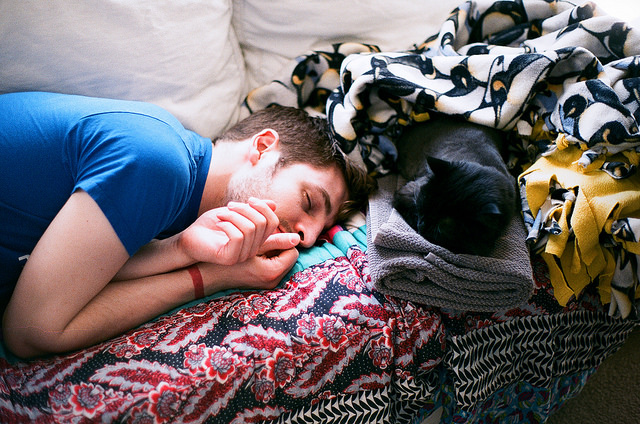 Image: “Nap Time” by Laura D’Alessandro[/caption]
by Alexander Huls
You’re working from home, sitting at your computer, slaying deadlines left and right, firing off emails like nobody’s business. Then you hit that time of the day. Your eyelids suddenly get droopy. Your brain seems to replace its matter with cotton candy. You hit that crossroad that all work-from-homers face: to nap, or not to nap.
Naps are one of the greatest things about being a freelancer working from home. All the money in the world can’t top that feeling of “I can nap right now and NO ONE CAN STOP ME.” (I’d still appreciate you sending me all the money in the world though). Naps do, however, come with dangers. Can it be procrastination? Sure. Can it be disruptive to the flow of your day? Absolutely.
That’s why—with my PhD in Napthropology and years’ worth of scientific research—I’d like to share my hard earned wisdom with you. Here are a few crucial tips on how to make the most of your work-from-home snooze.
1. Naptime is All About the “Time”
When it comes to the “time” in “naptime,” two things matter most: when, and how long? You want to nap at a time of day that doesn’t affect the flow of your work too much. You also want to nap for a length of time that doesn’t leave you with that groggy feeling that takes hours to get over.
Personally? I like to siesta right after lunch for about thirty minutes (studies show twenty is actually ideal, but I’m a rebel). A recently stuffed belly makes a great sleeping aid, and a lunchtime nap creates a natural two-part separation of my day: BC (Before Conkoutage) and AD (After Dozing). I’d recommend doing the same: place your nap in the middle of whatever your work day looks like. That’s because if you nap too close to the end of the day, you’re not going to find your productive groove again. You’ll be more prone to writing off whatever time you have left. If you nap too close to the beginning of your day, you risk never even finding that momentum that’s crucial to get you through a work-at-home-day.
2. Don’t Nap in Your Bed
Your bed’s amazing, I know. It’s your happy place, your comfort nirvana, your temple of tranquility. That’s exactly why you shouldn’t nap there. It’s too comfortable. Your bed triggers a muscle memory that screams “Bring on the REM!” the moment your body hits that mattress. A thirty-minute nap can easily turn into an hour-long battle with your snooze button, because why would you ever want to leave this memory foam mecca?
Instead, nap on your local couch. Sure, you may not sleep as blissfully as you might in your Somnambulist Heaven, but that’s the idea. You want to be comfortable enough to get a good amount of Zzzs to refresh you, but not so many Zzzs that your day gets lost.
3. Allow Yourself to Mourn the End of Your Nap (i.e. Wake Up Slowly)
Your eyes open and your first thought will probably be “Back to work!” After all, you have deadlines and emails waiting. But if you return too quickly to the computer, there’s a good chance you’ll be useless. You’ll still be groggy. Maybe resentful you had to end that dream of you bathing in freelance checks like Scrooge McDuck.
Try this instead: Wake up, hit snooze, but don’t go back to sleep. Lie there and use those precious snooze button minutes to let your brain limp itself back into consciousness and think about whatever you want. Then, once your mind—like the heat in your car on a cold morning—has warmed up, you can zombie shuffle your way back into your work.
4. Didn’t Nap Well? Tough. You Don’t Get a Second Shot
Not every nap will be successful. Your mind might not let you sleep because there’s that kilometer long to-do list you have to work through. So your thirty-minute oasis of serenity may become a restless period of just kind of lying there. If—after a few minutes—your mind isn’t allowing your body to commit to doing nothing, then do something. You can always try again later. But! If you lie there for thirty minutes doing nothing? No second chance. A two-nap day (even if one half fails) is one where your mind drowns in a perpetual fog and you don’t get anything done.
5. Remember: Naps Are Productive
Several studies (like this one) show that while napping might seem like the very height of procrastination, it can actually help your productivity. After all, what’s a nap but a basic “I don’t wanna!” desire to get a break from work? You should listen to that impulse. Now, you can pursue that impulse by wasting half an hour on figuring out what TV character you’re like (I’m Mulder), or you can get more out of your time: a rest and a mental re-invigoration. Because a nap isn’t so much blowing off work (well, okay, maybe a little), it’s about recharging yourself so you can return to work with renewed energy. So the next time you feel like you want to take a nap, tell yourself you’re not avoiding work, you’re ensuring you’ll do more of it.
Alexander Huls is a Toronto-based freelance journalist and copywriter who has contributed to The New York Times, The Atlantic, Esquire, Toronto Life, and other fine outlets. You can follow him on Twitter at @alxhuls.