Canada’s meeting place for freelance writers and creators
Established 2010
Canada’s meeting place for freelance writers and creators
Established 2010


by Lesley Evans Ogden
Recently I had the pleasure of attending “Courage Camp,” a master class on the business of freelancing. Run by freelance journalist Christie Aschwanden, with fellow instructors Bruce Barcott (journalist and author), Laura Helmuth (science and health editor at Slate), and Julia Galef, (President and Cofounder of the Center for Applied Rationality), the workshop was held August 24-27, 2014, at the University of Colorado Boulder’s Mountain Research Station.
Even before the workshop, the 23 participants were tasked with business planning and goal setting. Thinking long-term, beyond the daily grind of meeting deadlines and securing work, is something I often neglect. Amongst freelancers, I suspect I’m not alone.
So one of the most important things I took away from the workshop is that freelancing may be a business of one, but it’s still a business, and one worthy of goal setting and careful, insightful planning.
[caption id="attachment_9202" align="aligncenter" width="526"]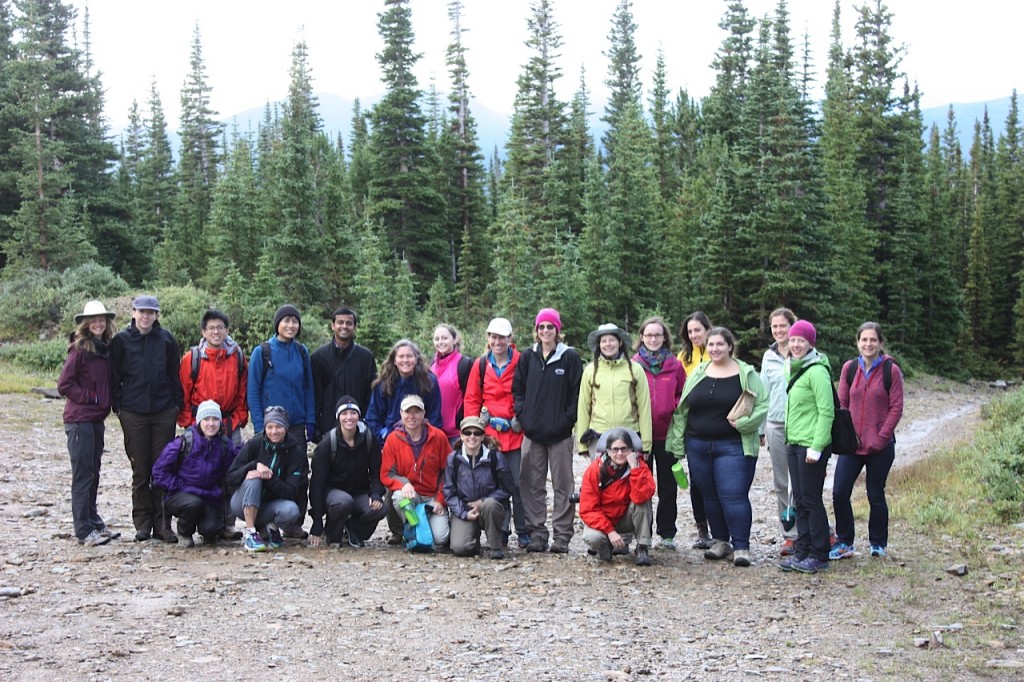 Group photo from the Colorado Courage Camp, a master class on the business of freelancing[/caption]
Our homework began even before the workshop. It consisted of self-reflection by identifying answers to a number of important questions about things that are working versus not working in your career, things you love versus hate, and how things are going on the money front.
One of the most useful aspects of this self-assessment exercise was to quantify the value of current clients, defining “value” in many different ways. We were asked to make a list of our current clients and create a spreadsheet that documented how much income they represent, how much time they occupy (tracking your time was highly recommended, using an app like Toggl), how well they pay, how much you enjoy the work, how the work advances your career, and how easy they are to work with.
I defined the latter by taking into account things like how easy a client is to pitch, how long and arduous the editorial/production process is, and how personable, polite, collaborative and respectful they are to work with.
For each of my clients I generated:
- a PITA (pain in the ass) factor from 0 (horrible) to 3 (awesome)
- a passion factor from 0 (work you hate) to 3 (work you love)
- a career factor from 0 (not resume-building) to 3 (career-building)
- a money factor from 0 (crap pay) to 4 (great pay per unit of effort)
Many of the workshop participants generated their own additional categories. What you decide to quantify doesn’t matter as much as taking the time to actually create scores tailored to your own business, representing what makes you tick.
What are the different motivations that drive what you do? By identifying these and giving each of your current clients a score for each category, then adding these separate scores together, it creates an overall cumulative score for each client representing their value across the diversity of factors you’ve identified.
Tasty buckets
During the workshop we explicitly examined categories of motivation for the diversity of work we do. Aschwanden amusingly refers to these categories as “tasty buckets,” the factors that define the “yumminess” of your work. It's important that you're honest with yourself about what you’re getting out of each client, explains Aschwanden.
"Your tasty buckets are the things that get you going. They’re the reasons you get up in the morning, and the reasons that you still pursue this career,” she says.
Money is one of the more obvious tasty buckets, but as we all know, there are easier ways than freelancing to make money, so it’s important to identify what else motivates you to carry on.
Apart from money, Aschwanden’s own tasty buckets, for example, include work she enjoys, working with people she likes, clients that provide a boost to her brand through their prestige and cachet, “bread-and-butter,” work that provides a regular, psychologically satisfying paycheque; interesting cutting-edge research, storytelling, having a voice, engaging with new ideas, and conducting interesting interviews.
Some of the other tasty buckets that participants identified were feeding your curiosity, travelling to interesting places, working with a team, enjoying solitude, making a difference, having a sense of belonging, asking great questions, and gaining respect as an authority in a specific field. Identifying which buckets are big versus small is also key.
For me, and for many others in the class, recognizing those tasty buckets, and quantifying them as client scores, was an exercise that helped to identify clients for the chopping block – those not worth the trouble to work for - and at the other end of the spectrum, clients worth cherishing for their career and job satisfaction merits. This was one of the most useful exercises of self-reflection that I gained from the workshop, one that helped to identify goals for the future by carefully examining the past.
“Not every job you do has to fill every bucket,” says Aschwanden.
Most likely, some clients will fill some buckets, and some will fill others. A diversity of clients will enable you to keep all of those buckets filled, leading to overall satisfaction and pleasure in your work. If you’re feeling stuck or ambiguous about a client, advises Aschwanden, it may be because you’re neglecting one of your tasty buckets.
Finding your tasty buckets, and quantifying client scores in a personally meaningful way is an exercise that I highly recommend. Such self-reflection is a step towards formalizing a business plan that balances dreams with reality, and propels you forward in your freelance adventures.
As a freelancer, filling those buckets is not just tasty. It’s delicious.
[caption id="attachment_9208" align="aligncenter" width="568"]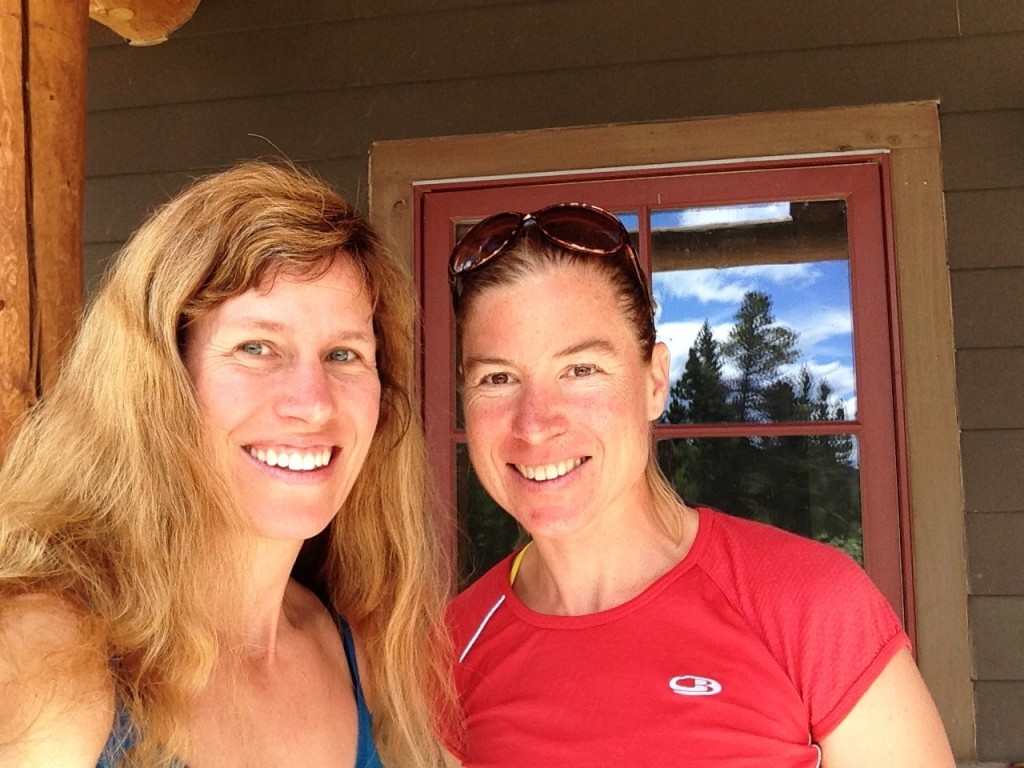 Lesley Evans Ogden with workshop leader Christie Aschwanden, at the Colorado workshop.[/caption]
Lesley Evans Ogden is a freelance science journalist based in Vancouver, Canada. A recovering scientist, she parachuted into journalism from the ivory tower, stopping for inspiration along the way at the Banff Science Communications Program and the Santa Fe Science Writing Workshop. She is a contributing writer at Natural History and Earth Touch News, and frequently contributes to New Scientist and BioScience. Her work has also been featured by BBC, CBC, Mosaic, The Washington Post, CNN, The Guardian, The Scientist and Cosmos, amongst others. Say hello at lesleyevansogden.com and on Twitter @ljevanso.