Canada’s meeting place for freelance writers and creators
Established 2010
Canada’s meeting place for freelance writers and creators
Established 2010


by Brittany Duggan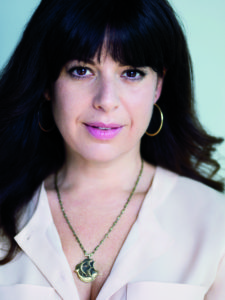
Cole Kazdin is a writer, performer and four-time Emmy winning television journalist. She currently lives in Los Angeles where she regularly contributes to VICE, MEL Magazine and Refinery29.
Kazdin has written for The New York Times, Los Angeles Magazine, Cosmopolitan and has produced television for HBO Documentaries and ABC Network News. She performs in her own one-woman plays and also coaches and teaches writing.
Storytelling is at the crux of all of her freelance ventures and she recently took the time to speak with Story Board about non-stop pitching, the importance of being on the ground, and why Twitter is not for her.
You left network news two years ago and you’re now a full-time freelance writer. What does freelancing look like for you?
Freelancing for me is constantly pitching — as a writer, your value is your ideas. Just about every relationship I now have with an editor started with a cold pitch, and not just an idea but something more fleshed out. I would say 99 percent of what I write are stories that I have pitched, not stories that get assigned to me.
Any tips on pitching? There’s no hard and fast rule. It’s hard to guess what sells but I’ll tell you about my first VICE pitch. I love the news (if you love the news and consume a lot of it then you’ve already done a lot of your homework because you know what’s out there) and it was right after the Paris attacks a couple of years ago. People hadn’t yet started talking about the messaging apps that members of ISIS were using to communicate and coordinate attacks and I thought that was really interesting. I’d done some stories before on privacy issues and where the line is between privacy, messaging services and harboring terrorist communication, so I pitched that to VICE and they bought it. Pitching starts as stuff that I’m interested in and not seeing, that’s my approach.
In the case of Standing Rock, where you’ve done a lot of reporting for VICE, you actually went first and pitched later. What happened there?
There are so many stories you can do without leaving your house, like a story on cyber security where you can interview people over the phone and do your research online. But a story like Standing Rock you can’t do remotely. It’s just not possible. So my colleague and I went because we weren’t seeing a lot of reporting on it, or not that we thought was commensurate to what was happening. I let all my contacts know that I was going to be there, I reached out to everyone I knew in television and people I know online and in magazines and newspapers. No one wrote me back. The police violence against the people that were there [was of interest] and that was kind of it. I don’t agree with it but I understand it.
So, once we were there we started meeting and just getting to know as many people as we could from their stories — and there were tons and tons of stories. I just emailed the editors I knew at VICE and MEL Magazine and said, here’s some stuff I’m seeing, here’s what’s happening. Your reporting is better when you’re in person.
There are a lot of stories that I’ve done where I could probably talk on the phone with someone. Like, I’m doing one on immigration. Being in LA now there are a lot of immigration stories and I could probably talk on the phone with someone, but when you go to a place you’re better because you’re tuned in as a reporter so you trust your instinct. That’s when surprises happen because nothing ever goes as planned. There’s no substitute for being in person.
That is ideal, but as a freelancer you often have to fund on-the-ground trips out of pocket... what’s the next best way to find unique stories?
Sources. It’s really valuable to cultivate sources. I found it was difficult for me to do this at a network because you don’t have time, you’re just chasing the news. You don’t have time to take a day off and take the head of the Office of Immigration out to lunch. But if you do, you will leave that lunch with five story ideas. As a freelancer, unfortunately, you are not paid for this by anybody but stories come from coffee with people and using your reporter’s eye while out in the world.
I was at a social event recently and I met someone who had just taken their dog to a Reiki healing class. I thought, that sounds insane to me, I want to know more. I pitched and sold that story. No one wants a story that is already out there and that’s where you, as an individual, are valuable because you have a brain that looks at things differently than the way my brain looks at something.
And maintain the sources you already have. I still write about Standing Rock for VICE because once a week I check in with people there.
Any other tips for writers?
This sounds so basic but it really is true: if you do good, thorough work, you will get asked back to the party. I think that is something that is not a light, little thing because there's so little accuracy nowadays in journalism — I’m constantly seeing stories that are reported on incorrectly. The major news organizations have misquotes, misspellings, and facts that aren't true. You know, something's not true if you read it online, even if it’s coming from the New York Times. Something’s not true just because somebody put it on Facebook. You never want a source from a website, you want an original source yourself.
These are basic journalism things but if an editor ever has to correct something like that, or if you ever embarrass a publication because you read something on a website that has an information point that turns out to be incorrect, it’s your reputation.
A group I’m part of recently brought up the “writers should write every day” tip. Do you have an opinion on that suggestion?
I mean, writing every day is a lovely idea. I probably do write in some way every day but it's not like John Steinbeck, sitting down to the computer for eight hours a day – that to me doesn't work unless you're independently wealthy. And if you are, then you have no excuse not to be writing every day.
But for the rest of us, you know, we need to work. I’ll sometimes write down, okay, today you will do 2 hours of writing, or whatever, and then something will happen in the news and I’ll have a couple ideas that I want to pitch. So, I try to let myself go with the flow. When you're writing for money it’s when you finish the story that you get paid. So if I have hired work, that takes priority over all other writing. I think that setting absolute rules for yourself is also kind of a set up for failure.
I noticed you’re not on Twitter.
I just left Twitter. I can’t handle the overload of it, it just felt like screaming into air for me. I have colleagues who are tweeting all the time, for me it just feels like a second job. I post stuff on Facebook and Instagram a little bit, but not really in a way that promotes my "brand," if you will. That’s not something I enjoy so I don’t do it. It depends on what your goals are as a writer.
Last question, not really summer reading, but any favourite writing books?
For writing — and this is not necessarily journalism —I love Stephen King's book [On Writing: A Memoir of the Craft]. It's just wonderful and lovely.
There’s a great book for creative writing called Writing Alone and With Others by Pat Schneider — it's just full of writing exercises for cultivating a creative writing practice that I think is great.
If people are interested in writing memoirs, Marie Karr has a book called The Art of Memoir — it's a couple of years old but is just a great, great book.
Anne Lamott's Bird by Bird is a classic writing book.
And one written by a good friend of mine is called Finishing School by Cary Tennis — it’s a book about how to finish projects, which is something people often struggle with.
Brittany Duggan is a freelance journalist and editor based in Vancouver. Her work has appeared on CBC Radio and in the Georgia Straight. Brittany is a research assistant for Canada’s The Conversation and is a lover of the arts. Follow her on Twitter @brittanynduggan and find on her LinkedIn.